Learning the natural history of human disease with generative transformers
Limitations in current methods
- Diseases and conditions don’t happen in isolation - they cluster and affect each other’s progression
- Current risk prediction methods operate in silos, concentrating on one condition at a time
- In most patients with intensive health burden, for e.g. aging populations, better models are required to represent the complexity of multiple diseases and their progression
Mapping human history as a large language model (LLM)
- LLMs, like ChatGPT and Claude, use statistical models to predict the next word in a sentence based on the previous words
- The paper hypothesizes that a similar approach can be applied to disease progression, where past diagnoses can be used to predict future ones
- Diseases are “words,” a patient’s health history is a “sentence”
Delphi, a modified GPT architecture, models health trajectories
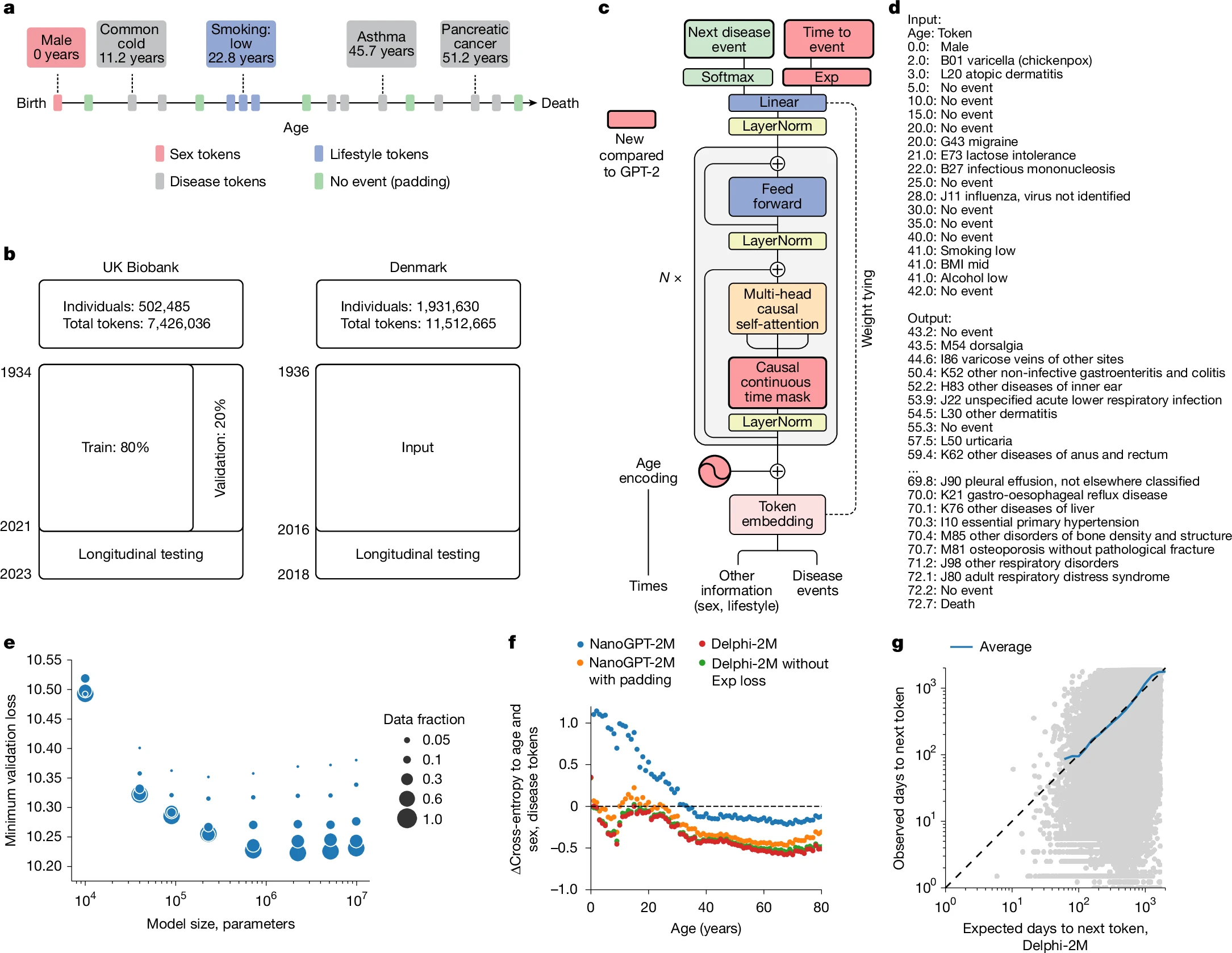
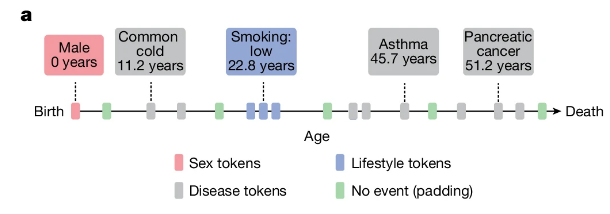
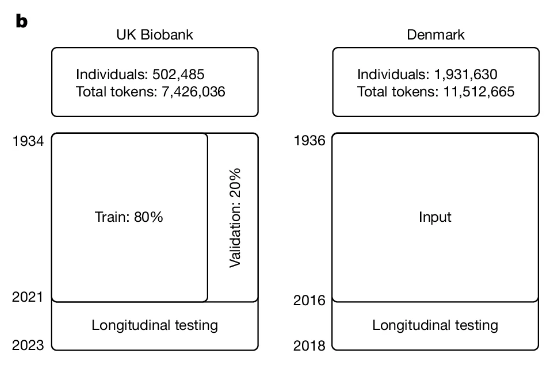
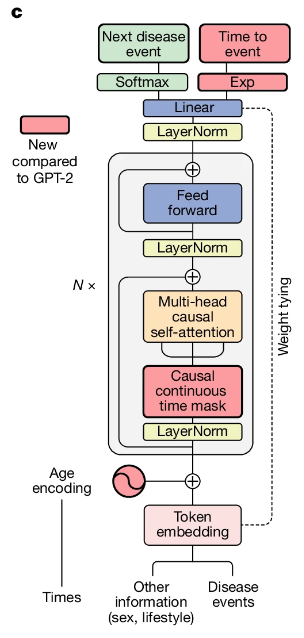
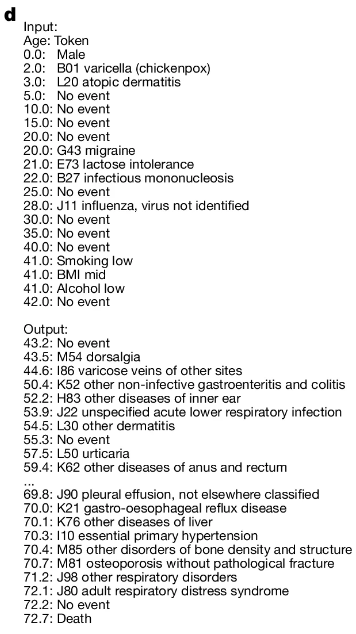
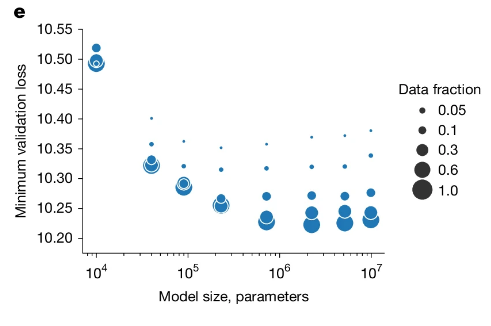
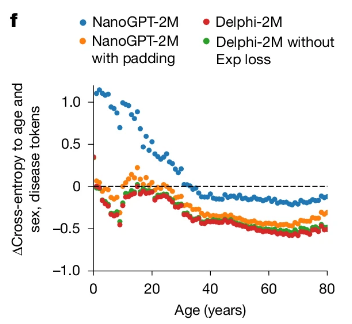
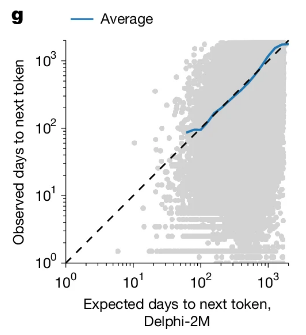
GPT-2 vs Delphi-2M
| GPT-2 (Original) | Delphi-2M (Modified) |
|---|---|
| Discrete positional encoding | Continuous age encoding (sine/cosine) |
| Predicts next token only | Also predicts time to next event (exponential model) |
| Standard causal masking | Masks same-time tokens (no circular causality) |
Model size: 2.2 million parameters (12 layers, 12 heads, 120-dim embedding)
Follows empirical scaling laws — performance improves with more data
Results
Results and Discussion
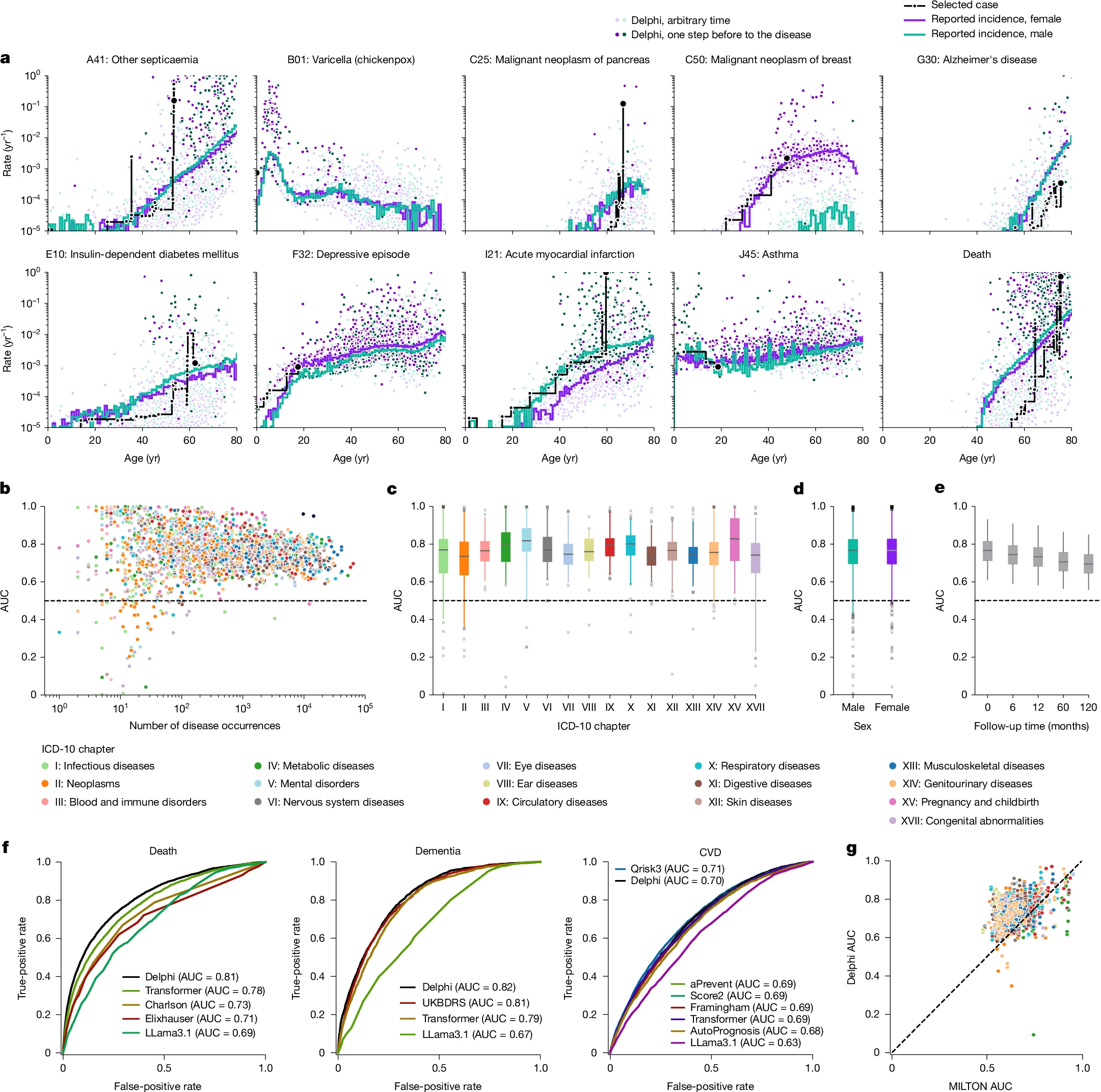
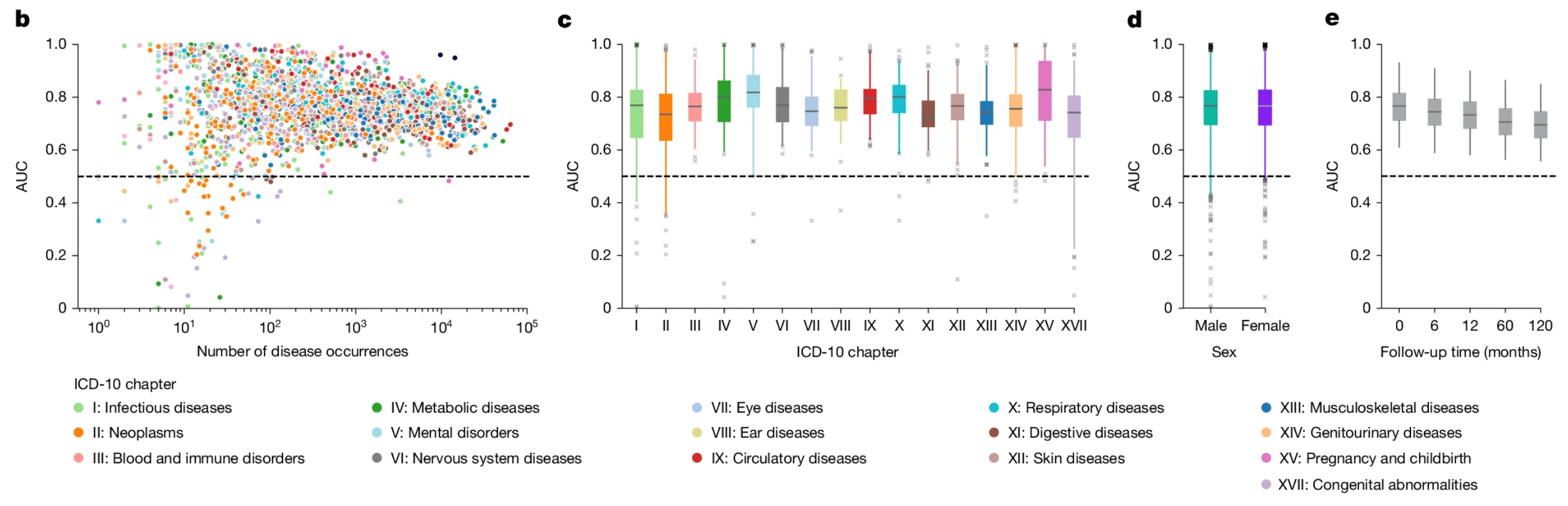
Performed significantly well across ~1,000 diseases
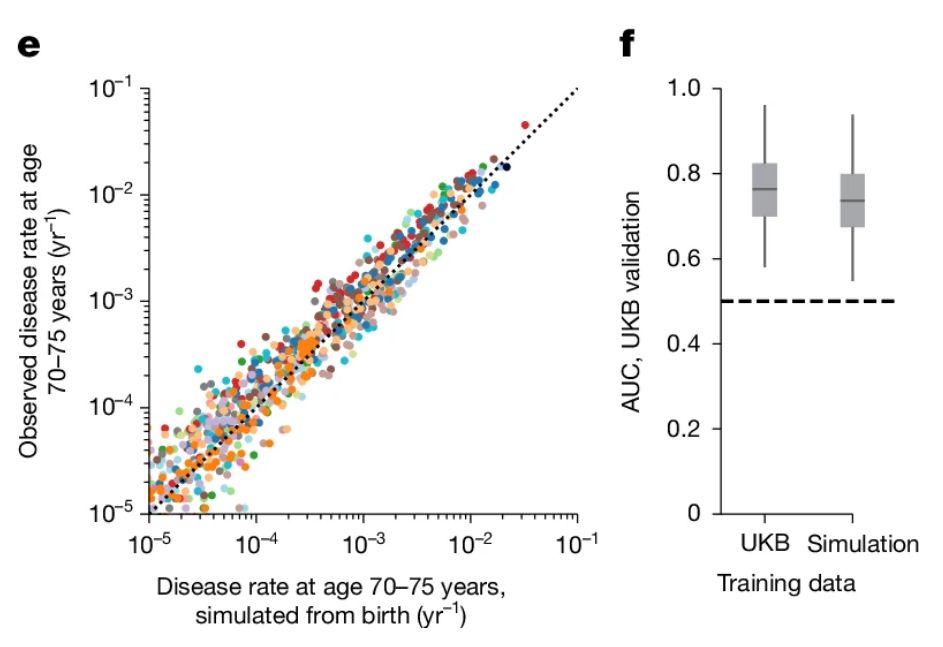
Average AUC ~0.76 across all diseases in internal validation
97% of diagnoses had AUC > 0.5 (better than random)
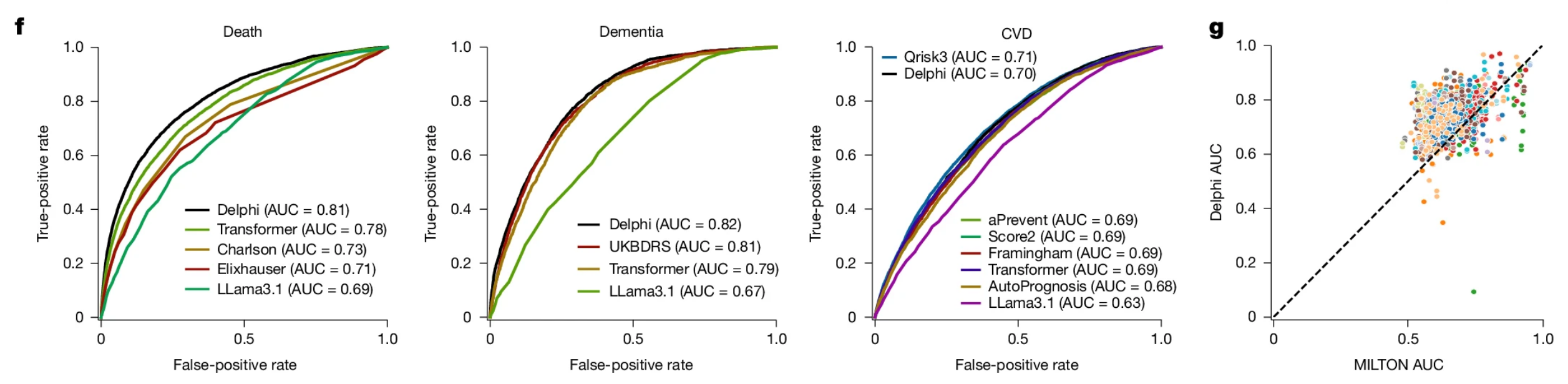
Predicting death: AUC = 0.97
Performance holds up to 10 years into the future (AUC ~0.70)
Compared to current standards:
Matches or beats cardiovascular risk scores (Framingham, QRisk3)
Matches dementia risk scores (UKBDRS)
Outperforms death prediction tools (Charlson, Elixhauser)
Results and Discussion
For a patient with digestive tract diseases → pancreatic cancer risk elevated 19×
Pancreatic cancer diagnosis → mortality rate elevated ~93,000×
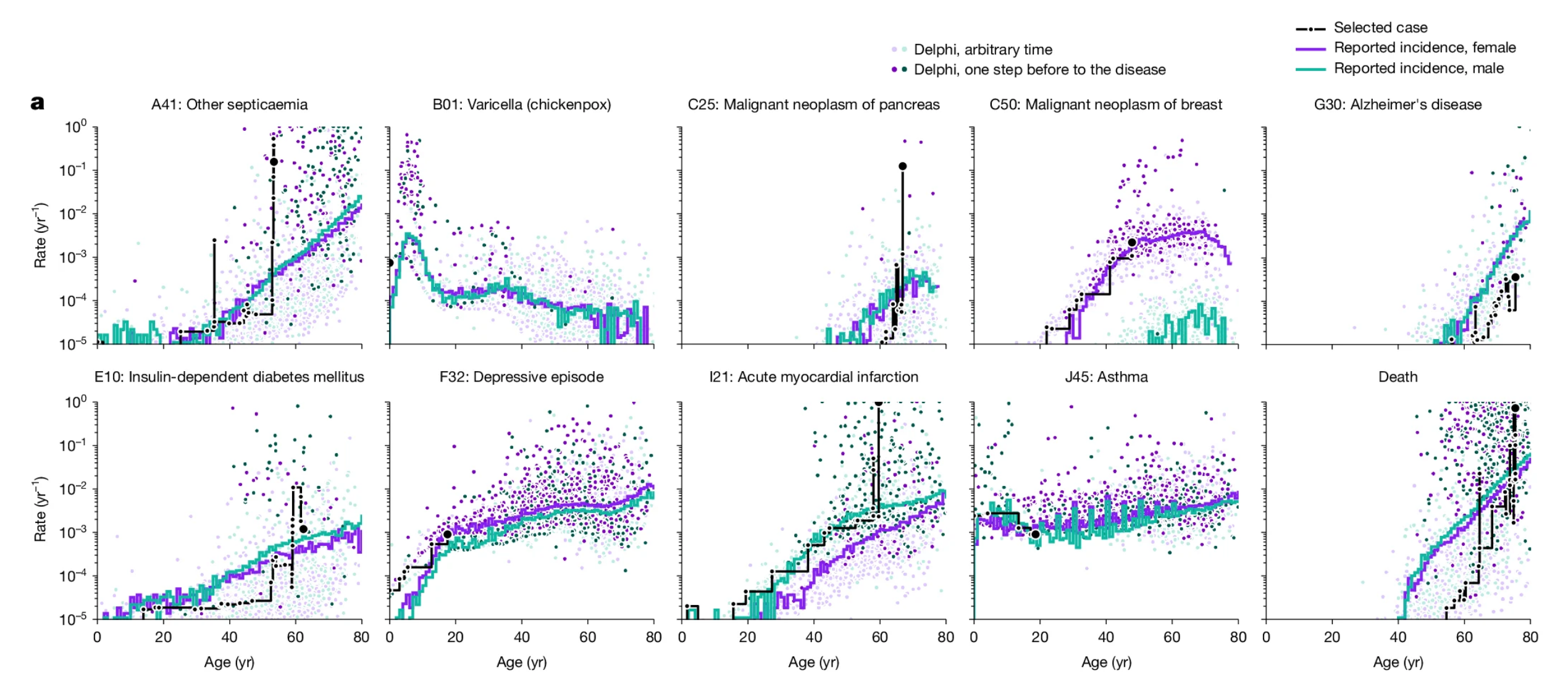
Chickenpox peaks in childhood; heart attacks rise exponentially with age
Delphi updates each person’s risk every time a new diagnosis is recorded
Clinical and Biological Revalence
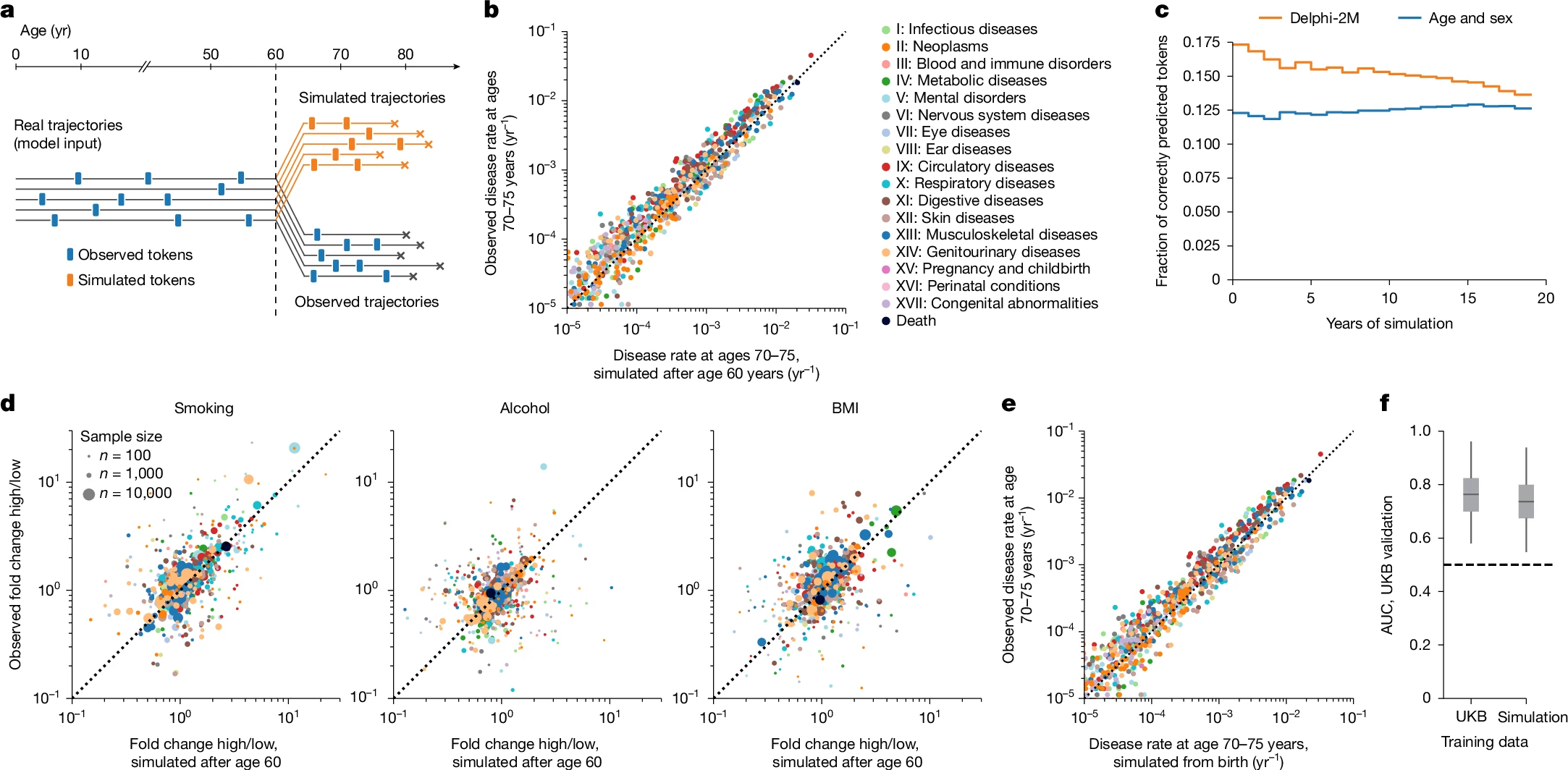
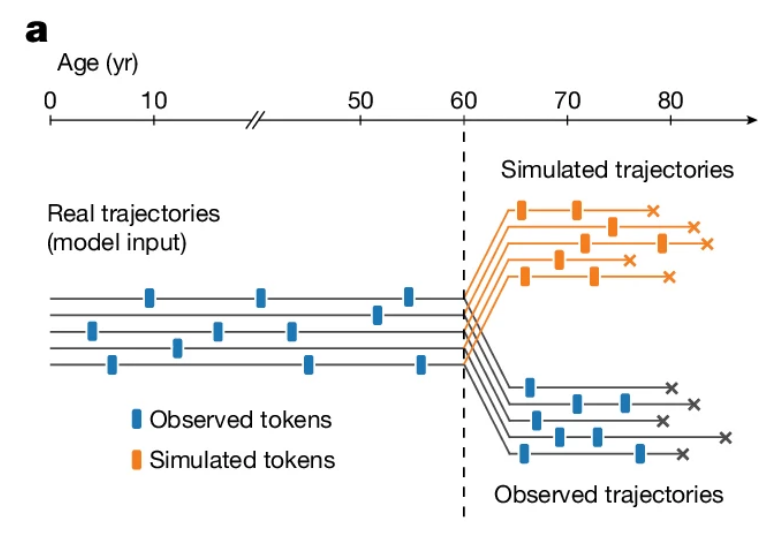
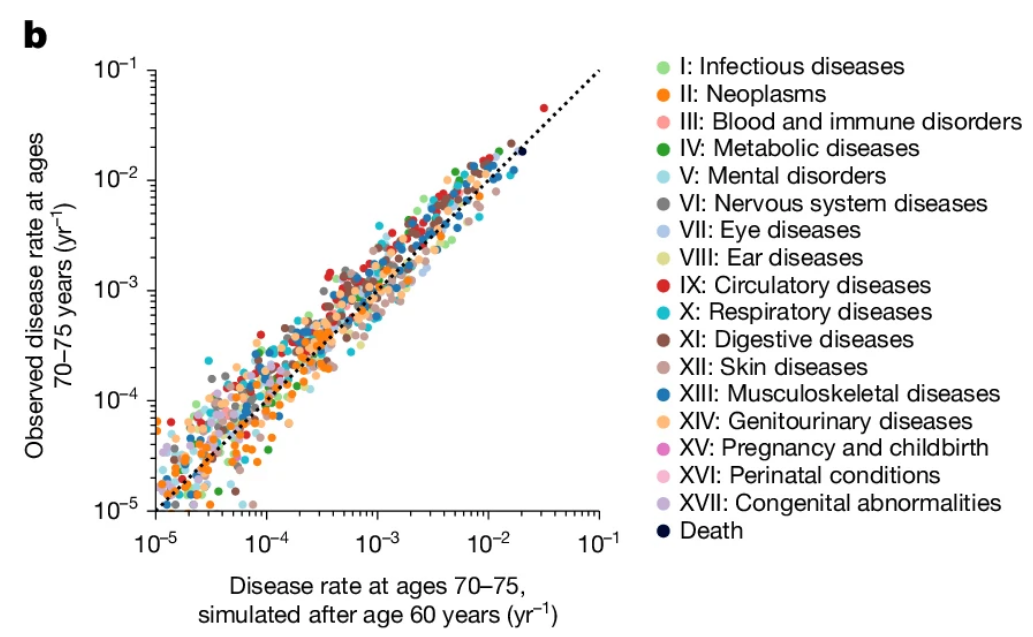
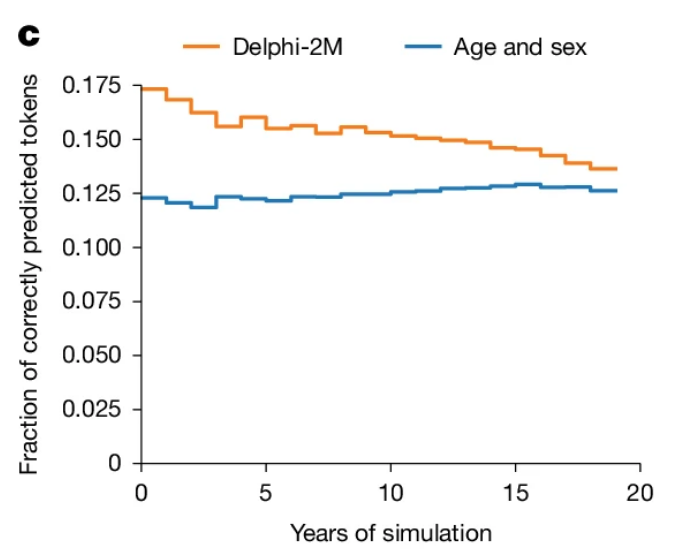
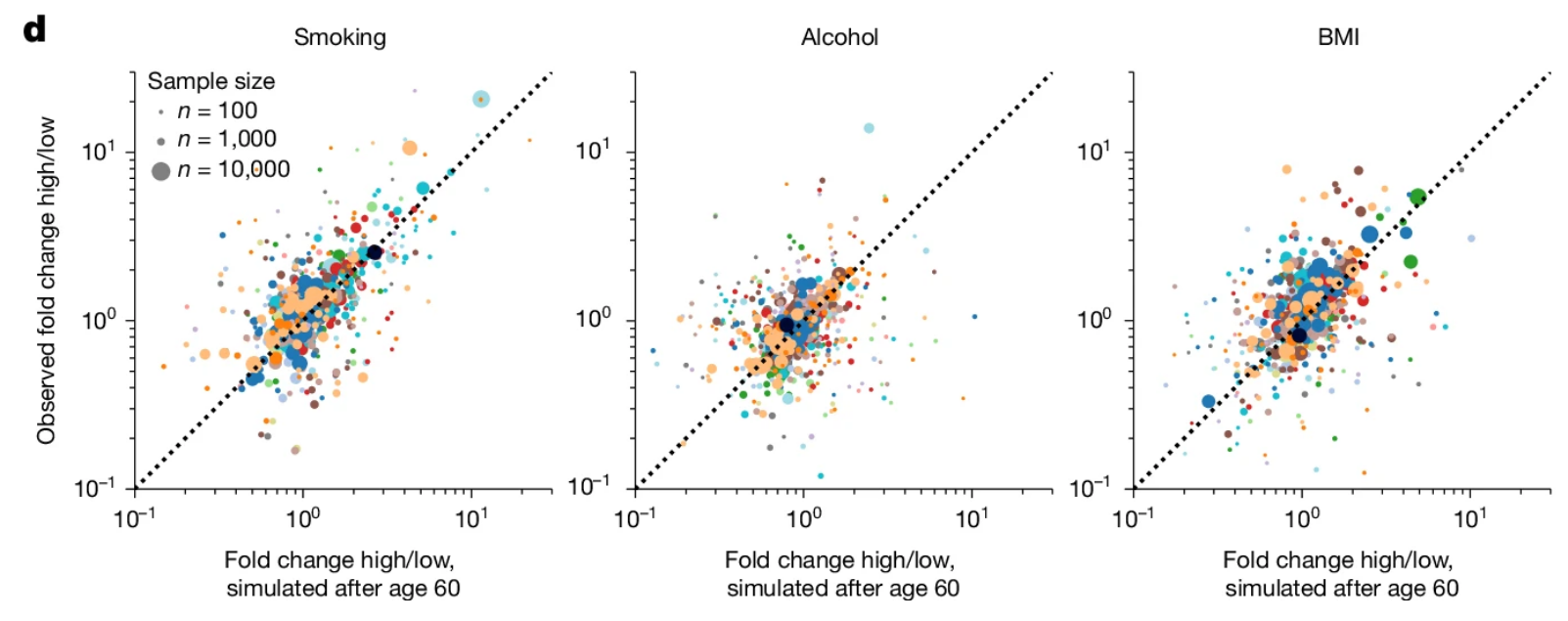
Unlike conventional models, Delphi can sample entire future health trajectories
Input: everything known about a patient up to age 60
Output: simulated health events for the next 20 years
Applications:
- Estimating future disease burden at population scale
- Planning healthcare resources for specific communities
- Identifying who needs screening before conventional age thresholds
Clinical and Biological Revalence
Clinical and Biological Revalence
Early Cancer or any disease screenings
Clinical Decision Support by including multi-disease risk
Predicting community-level disease burden for healthcare planning
Digital Twin technology and Similar Patient identification for personalized medicine
Limitations
Only predicts correlations, not causations
Limited performance for ages 80+ (insufficient training data)
Diabetes prediction still outperformed by a single blood biomarker (HbA1c)
UK Biobank population is skewed towards white, affluent, educated — the healthy volunteer bias
Recruitment ages are between 40-70 years old and hence underestimates early mortality (immortality bias)
Data source missingness (hospital vs. GP records) influences predictions
Future Directions
- Add genomic data, imaging, wearables, prescription records
- Connect Delphi to LLMs as a risk module
- Integration of free-text clinical notes
If interested, you can also read Dr. Yonghui Wu’s thoughts on the paper in Nature
Information Modelling Context
Based on the study, results and limitations presented by the researchers, they use the phrase AI very carefully (less than 10 times in the paper text)
A rational understanding of Delphi will validate the same - there is nothing artificially intelligent about it
It is a statistical model that learns patterns in data and makes predictions based on those patterns
The part that seperates it from other similar studies is their implmentation of disease history modelling as the input for their model, representing events in a time-series, generalizable to any patient in any common data model (For e.g. i2b2, OMOP, PCORNET, etc.)
Fixed coordinate systems are not a new concept- principles of genetic data analysis are build on genomic coordinates that are uniform across all patients, and hence it is easier to identify mutations and changes and make inferences about their effects on disease risk and progression
Similarly, the use of age as a coordinate system for disease history allows for a more standardized and interpretable representation of health trajectories, which can be applied across different patient populations and healthcare settings
