Zero Knowledge Medicine

Privacy Preserving Fixed Coordinate Temporal Architecture

Piyush Chaudhari

Rich Data Poor Data

  • Data, especially healthcare data is touted as the new currency
  • The issue with our new currency is that while it is easy to deposit in a bank, there is little to no yield on it
  • Clinical Informatics Decision Making is built on averages, and you can read the book Flaw of Averages to see why it is generally not a good idea

Knowledge - Mile Wide and Inch Deep

  • Current Prediction Models are trained on limited datasets - the limited refers to the scope of information contained in them
  • Reasons
    • HIPAA and Privacy Data Sharing Restrictions
    • Even when shared, data is paranormally distributed
    • Common Data Models have common representations but variable transformation workflows
    • Intensive, but not interoperable resource investment

The Fix

  • Genomic data is already structured as a fixed coordinate index on genomes
  • For e.g. Mutation at chromosome a, postion b means the same for everyone
  • This helps direct comparision across individuals and ML at scale
  • Mathematically, each genome is represented as a vector in shared space
\(g \in\) {\(A,C,G,T\)}\(^n\)
  • Genomic data, however, doesn’t support trajectories, since it is mostly static

The Fixed Coordinate Temporal Data Model
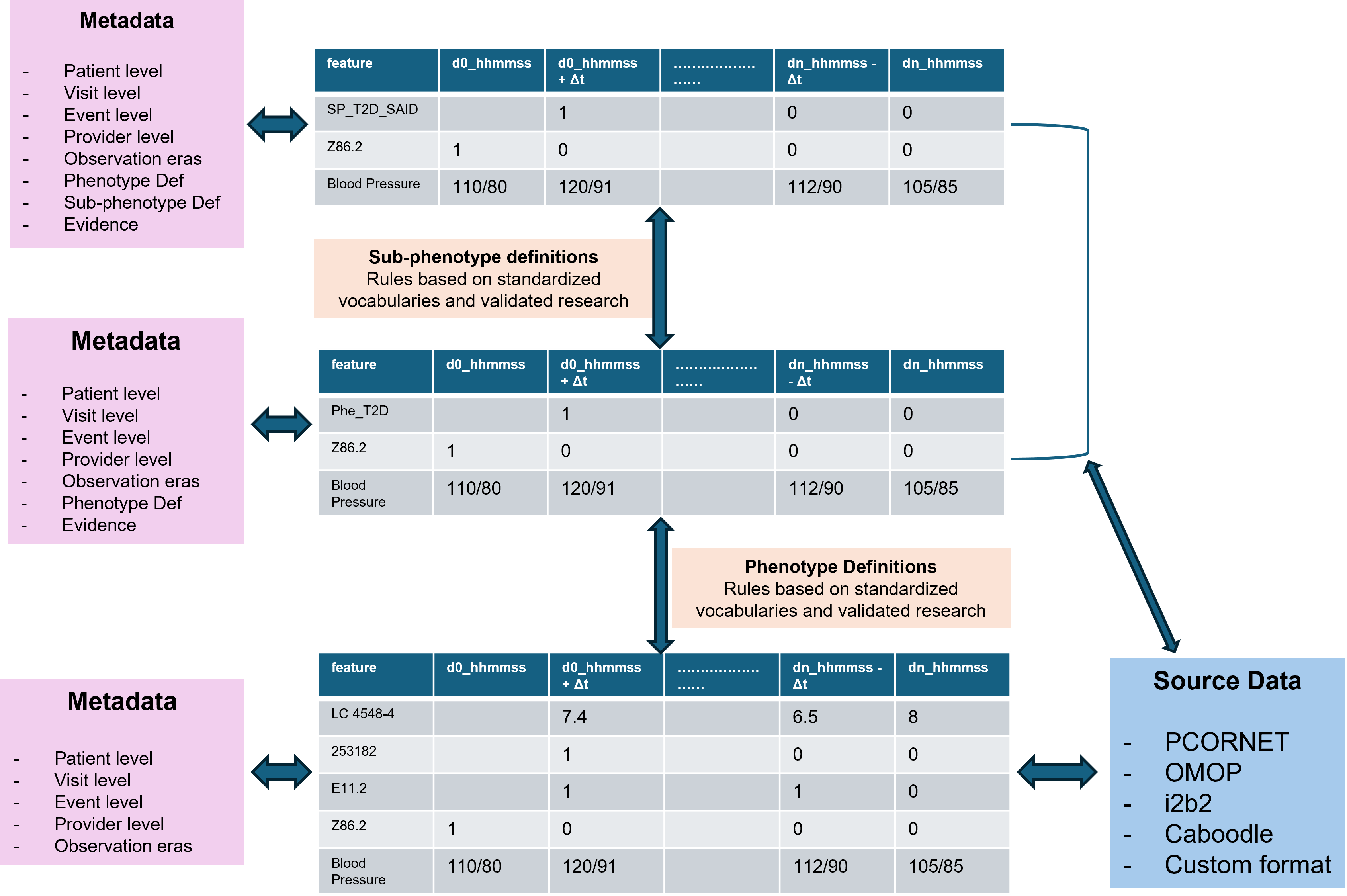
  • We will look at genomic data structure for inspiration, not instruction
  • Each patient will be represented as a point in a shared coordinate space
    \(Health Coordinate = z(t) \in R^d\)

where \(z\) are the physiological coordinates, \(t\) is time since birth and \(R^d\) represents d-Dimension real space

  • The health history of each patients becomes a sequence from birth -> present -> future

The Fixed Coordinate Temporal Data Model
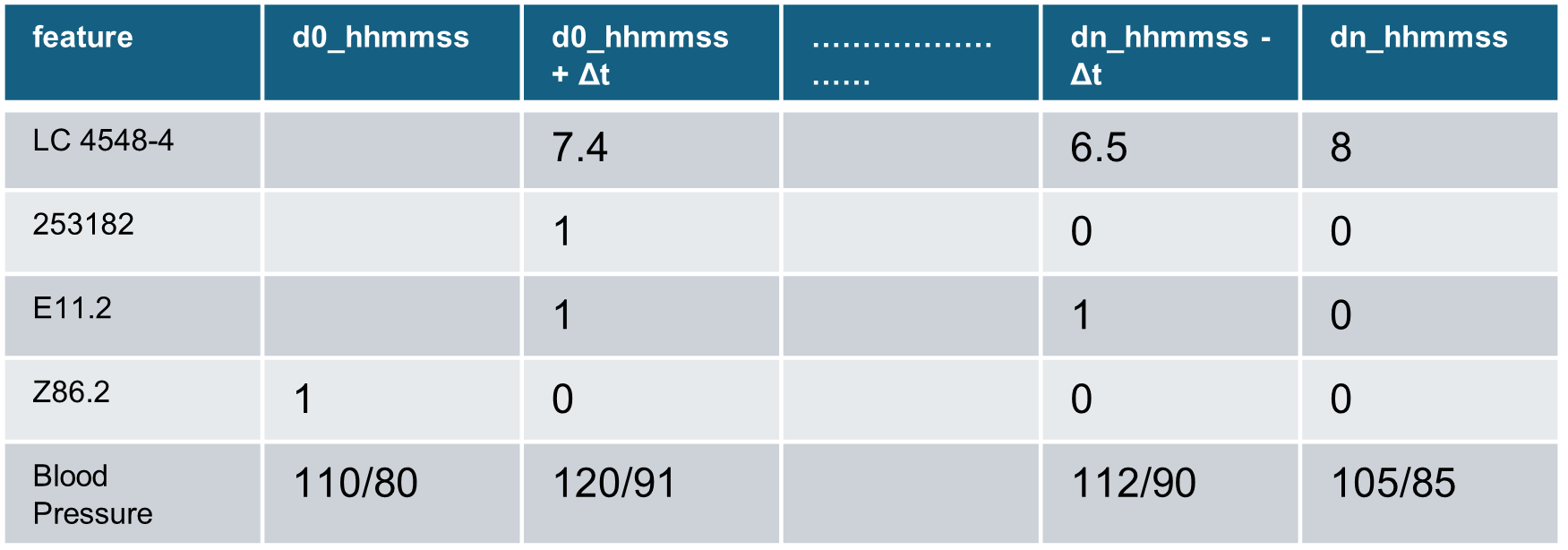
A comprehensive represention of Fixed Coordinate Temporal Data Model
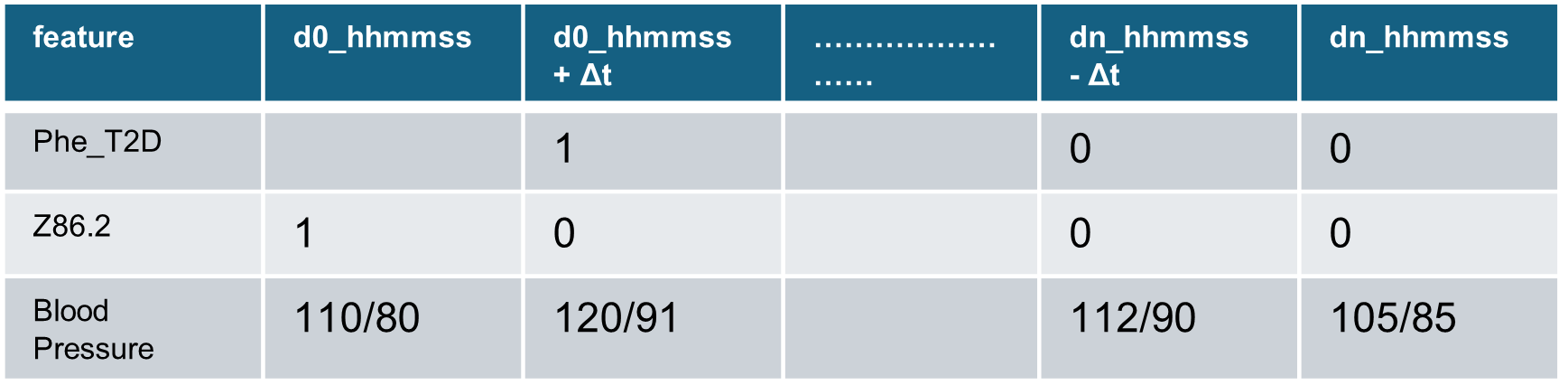
A comprehensive represention of Fixed Coordinate Temporal Data Model
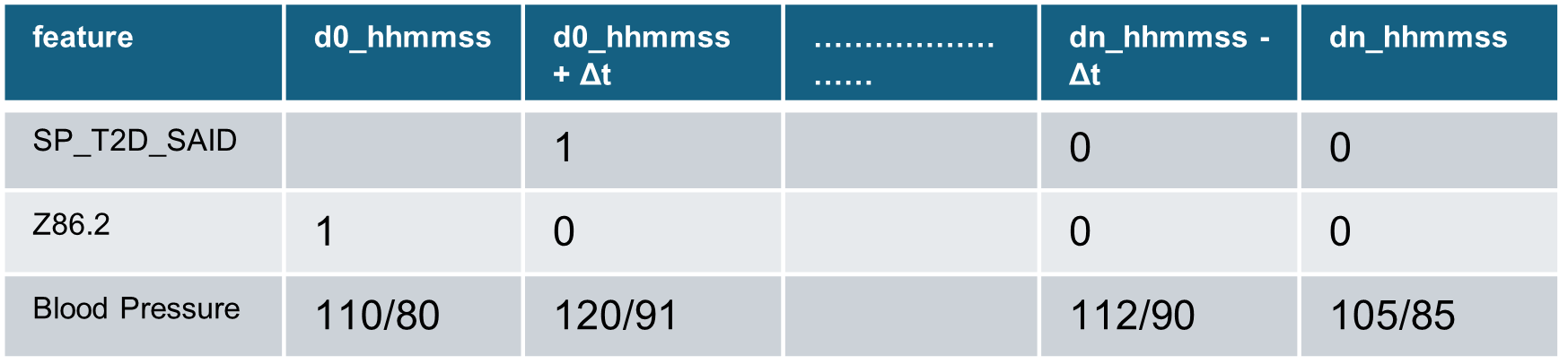
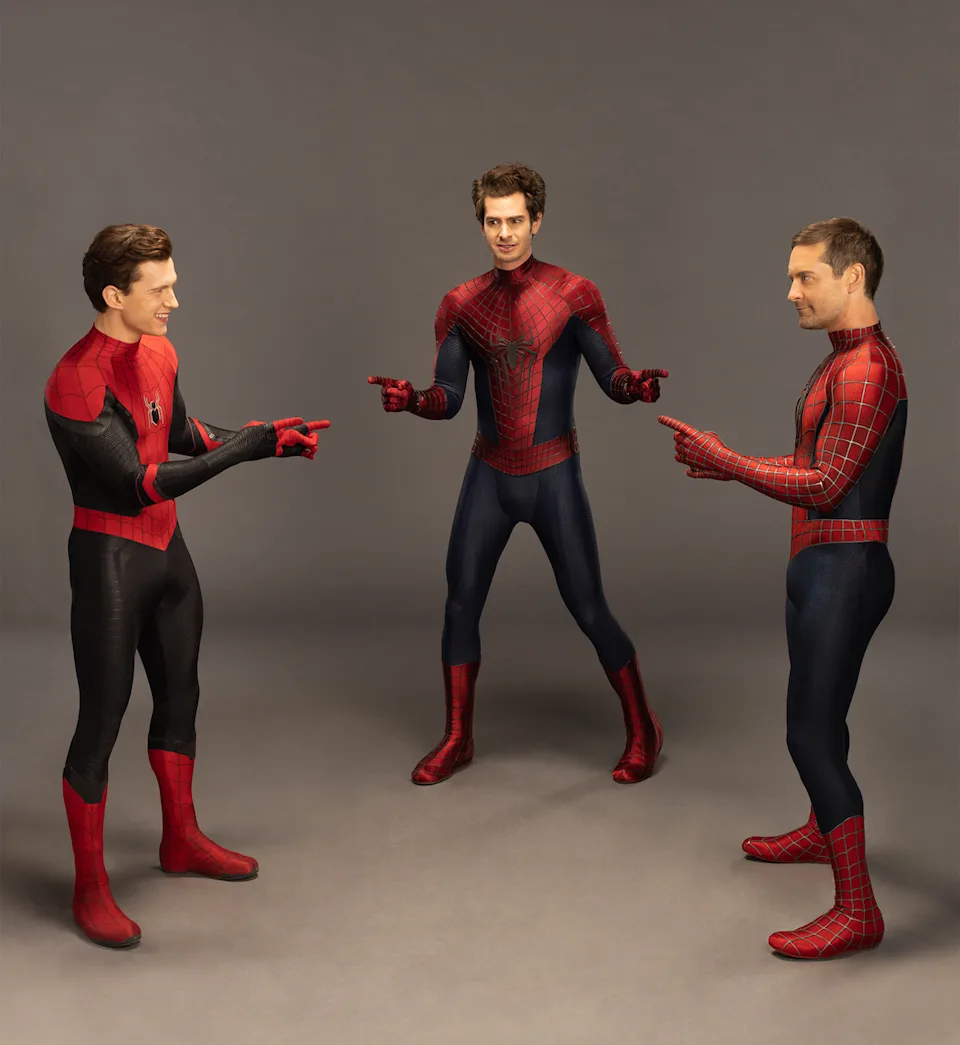
Applications - Similar Patients

  • To identify patients with similar physiology in this shared coordinate space, mathematically, we can calculate distance \(d\) and specify threshold \(\epsilon\)

\(d = ||z\)\(1\)\((t) - z\)\(2\)\((t)|| < \epsilon\)

  • Imagine if clinicians can readily review - what happened to the patients most like my patient?
3 Spiderman from Marvel Movies, representing Similar Patients Matching

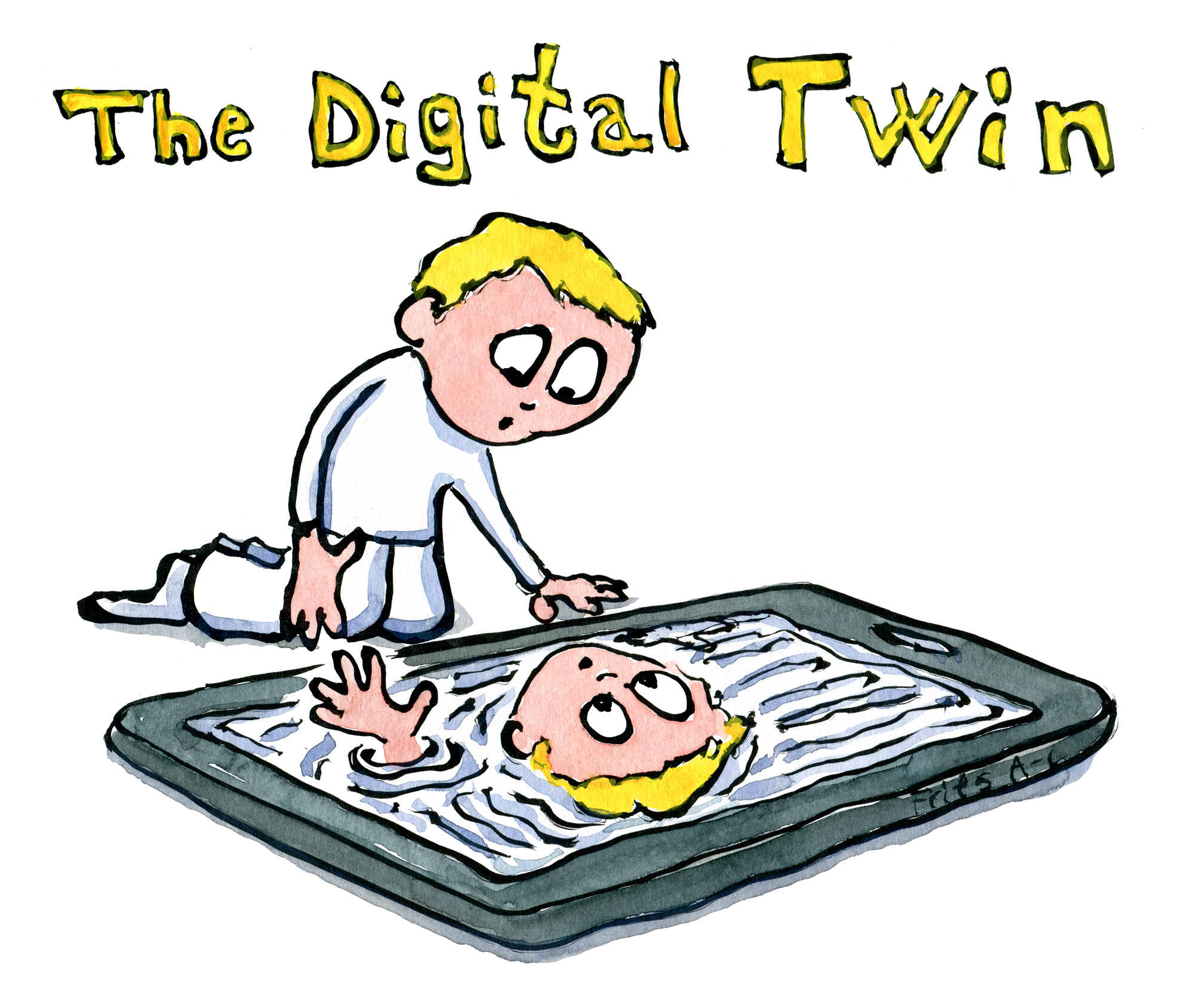
Applications - Digital Twin

A chid looking into their device to see a mirror image of them, representing Digital Twin
  • As patients move through the shared coordiante space over time, it can mathematically represented as

\(z(t) = z(t + \Delta t)\)

  • This can help simulate the odds of
    • Progression of disease
    • Response to treatments and adverse events
    • Risk of complications

What about Privacy?

  • Genomic data, for all its benefits, cannot be deidentified or privacy-protected without losing significant information

  • Our proposed method while making representation and analysis easier, makes deidentification exponentially tougher

  • HIPAA and Privacy doesn’t allow hospitals to share patient data in raw or even transformed format

  • Data is touted as the new currency, but the most important universal currency is trust

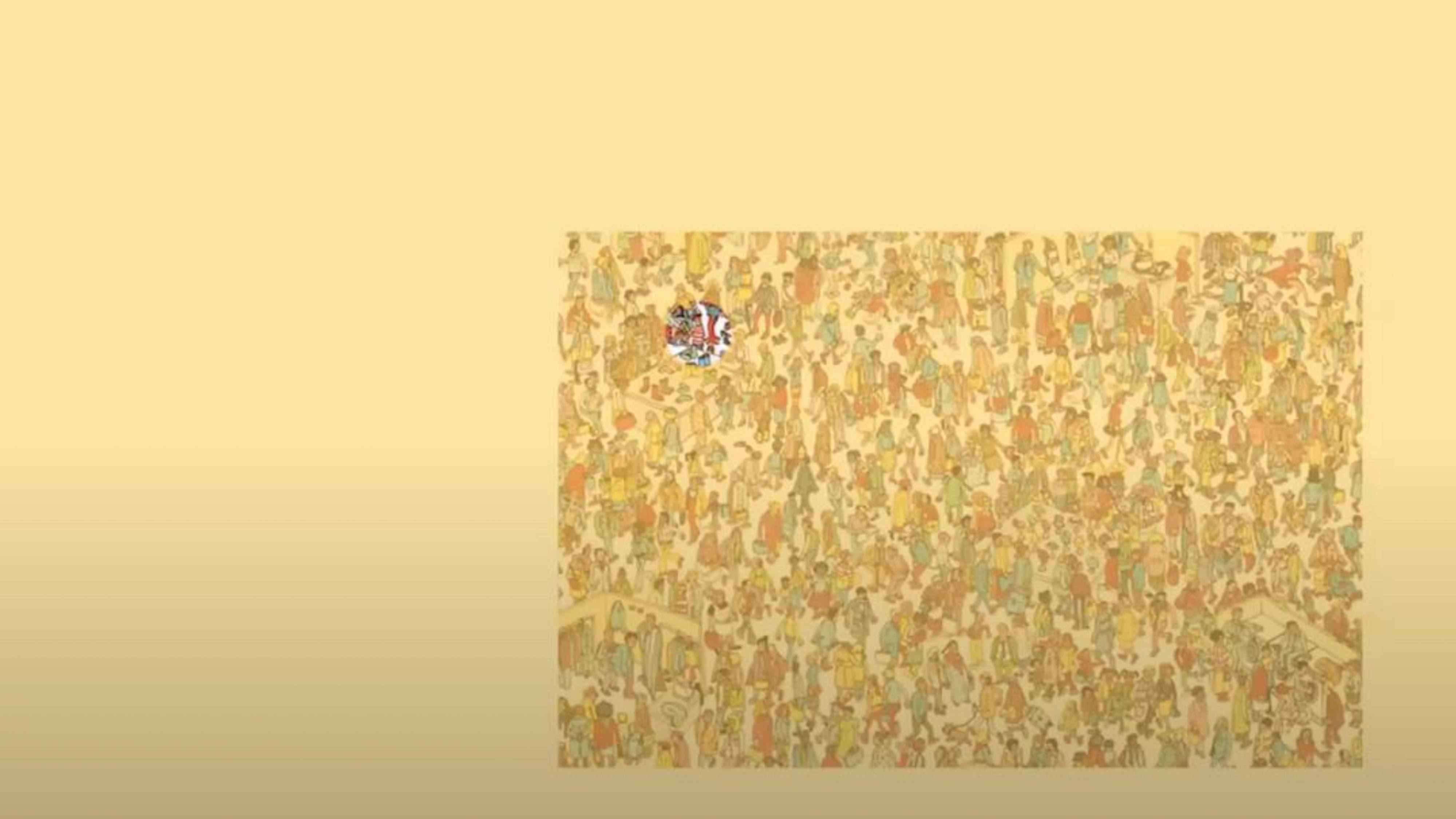
Zero-Knowledge Proofs (ZKP)

Where is Wally?

Where is Wally?

ZKP with Fixed Coordinate Temporal Data

  • Our proposed fixed coordinate sequence can easily be matched because as the length of the sequence increases, the odds of another sequence with ~100% similarity decreases
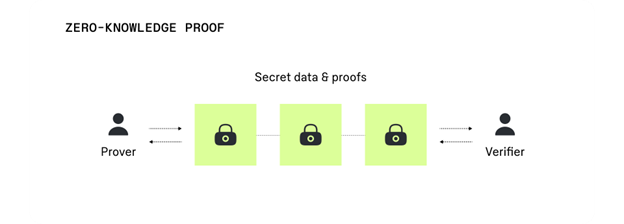
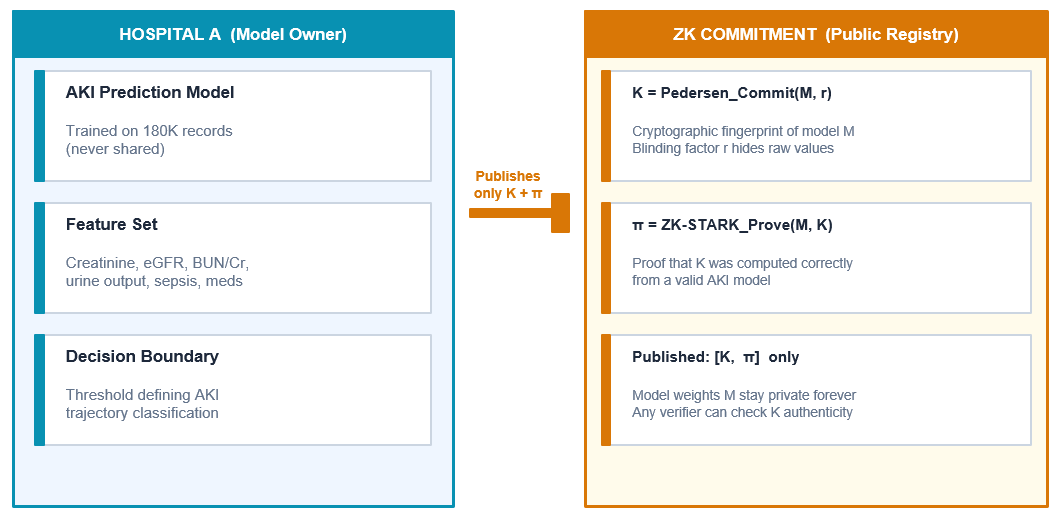
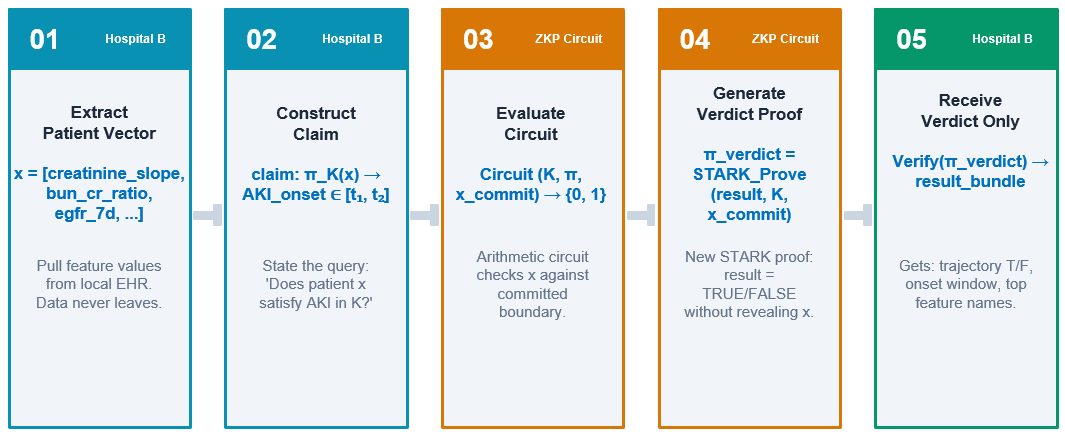
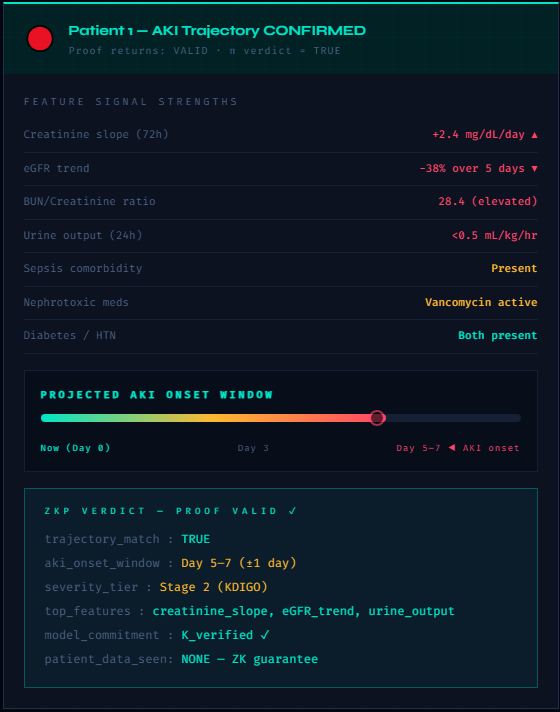
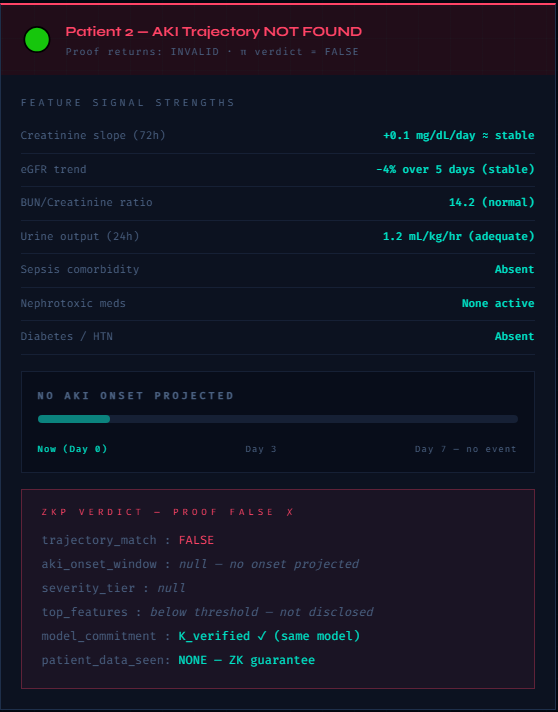
  • Zero Knowledge Proofs (ZKPs) can prove - for a given input and model, an output is produced, without revealing any of the above

Proposed Workflow

  • Hospital A has deployed an AKI prediction model that Hospital B wants to use with their patients

  • Traditional Requirements

    • Hospital A publishes their model and Hospital B runs it on their patients, OR
    • Hospital B sends deidentifed dataset to Hospital A
    • Requires intensive review from HIPAA, and will most probably not be allowed

ZKP Workflow

General ZKP workflow

General ZKP workflow

Moving Forward

  • Phase 1 - Draft transformation architecture for fixed coordinate temporal data model to and from common CDM like i2b2, OMOP, Epic Caboodle. The source code for open-source model will be made available as a open-source resource
  • Phase 2 - Test Phase A on sample AKI patients at UF Health and validate it over larger datasets, like Epic COSMOS
  • Generate prototype ZK STARK infrastructure using temporal data model for AKI risk prediction, similar patient matching and digital twin trajectory on a small sample of patients

Current Limiting Factors

  • Fixed Coordinate Temporal Data Model
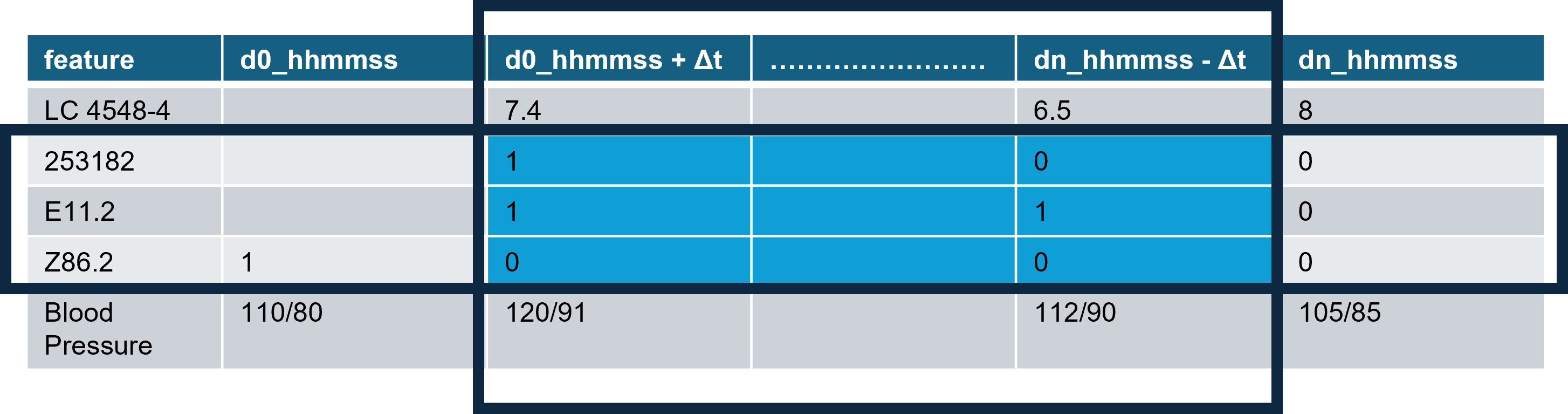
    • Requires clean source datasets
    • Variability in methods is lower but not \(0\)
  • Zero Knowledge Proofs
    • Expensive and slow for complex models (e.g. Neural Networks), may need quantization
    • Latency, especially if needed real-time
    • ZKPs are based on Math Intelligence, so not black boxes, but interpretation is more difficult than standard workflows
    • Model Drift as data changes

Why Now?

  • Verification resources can be federated (similar to crypto blockchains) since no sensitive data is required in this step
  • On May 31st, UF Health EHR will have 15 years of data in EPIC EHR - Medicine is finally digital and massive with multi-omics domains
  • ZKP will enable ML models to be trained with larger, more diverse data points
  • ZKP, along with fixed coordinate data model can achieve “actual” Clinical Decision Support System
  • Instead of can we afford to do it, the question should be can we afford not to do it?

Why Now?

Nothing is as powerful as an idea whose time has come
  • Also, in Academy Award Winning Artist Ejae’s words

We’re goin’ up, up, up, it’s our moment

You know together we’re glowin’

Gonna be, gonna be golden

Thank you

This presentation was made using Quarto. Quarto enables you to weave together content and executable code into a finished document. Click here learn more about Quarto.